


The UNWIND™️ Method: A Journey Through Fascial Wisdom
Updated: Oct 3
The Foundation of UNWIND™️
The UNWIND™️ method is not just a technique; it is a synthesis of knowledge from various pioneers in the field of fascia and bodywork. Each contributor has added a unique layer of understanding, helping to shape a holistic approach to self-care and wellness.
Tom Myers
The Cartographer of the Fascial Body

Before Thomas Myers, anatomy was a story told in isolation. The bicep. The hamstring. The rotator cuff. Each muscle was named, diagrammed, and studied as if it existed in a vacuum - separate from everything around it, responsible only for its own action.
Myers looked at the cadaver and saw something different entirely. A student and colleague of Ida Rolf - the pioneering structural bodyworker who first proposed that fascia was central to human health and movement—Myers spent years in the dissection room tracing something that conventional anatomy had always cut through and discarded: the continuous sheets and lines of fascia that connect structures from one end of the body to the other.
What he found became Anatomy Trains. Published in 2001 and now in its fourth edition, Anatomy Trains proposed a radical rethinking of how the body organizes movement and transmits force. Rather than isolated muscles working alone, Myers described continuous myofascial meridians - lines of fascia and muscle that run uninterrupted through the body, connecting structures that had never before been considered related.
The Superficial Back Line runs from the plantar fascia of the foot to the forehead. The Deep Front Line connects the inner arch to the jaw. The Spiral Line wraps the body in a double helix, linking the hip to the opposite shoulder. Each line functions as a unit - which means that tension, restriction, or injury anywhere along a line affects everything connected to it.
This is why your chronic neck pain may originate in your hips. Why your jaw clenching connects to your pelvic floor. Why treating only the site of pain so rarely resolves the pattern.
Myers didn't just give us a new map of the body. He gave us a new way of reading it - one in which the whole is always more than the sum of its parts, and in which the tissue that connects everything is just as important as the structures it connects.
For UNWIND™️, Anatomy Trains is foundational. When we work along the spine, the hips, the shoulders - we are working with the fascial lines Myers mapped. When we trace a restriction from one region of the body to another, we are reading the language he taught us to speak.
Dr. Stephen Levin
The Architect of Biotensegrity

Most scientific revolutions begin with a question that everyone else forgot to ask. Stephen Levin's question was this: if bones stack on top of each other the way conventional biomechanics suggests - if the body is a compression-based structure, like a column of bricks - then why don't we collapse under our own weight?
Levin was an orthopedic surgeon who spent fifty years in clinical practice. For forty of those years, he quietly pursued an answer that conventional biomechanics couldn't give him. The prevailing model said that forces in the body travel in straight lines, that joints are simple hinges, and that load is managed locally - one structure bearing down on the next. Levin looked at the human body and saw something else entirely.
Standing in a natural history museum, he noticed that the wired skeleton of a dinosaur wasn't stacked - the bones were suspended. Floating. Held in place by something he recognized from the sculptures of Kenneth Snelson and the architecture of Buckminster Fuller: tensegrity.
Tensegrity - a portmanteau of tension and integrity - describes structures in which compression elements float within a continuous tensional network, distributing forces throughout the whole rather than concentrating them at any single point. In a tensegrity structure, no part bears load alone. Every part is connected to every other part through a continuous network of tension - and when any part moves, the whole system responds.
Levin called his biological application of this principle biotensegrity. Its implications were profound. If the body is a biotensegrity structure rather than a compression-based column, then bones don't stack—they float, suspended within the continuous tensional network of the fascia. Forces don't travel point to point - they distribute throughout the whole system. The tissue that makes all of this possible - the medium through which tension is transmitted, distributed, and balanced - is fascia.
Biotensegrity explains things that conventional biomechanics cannot. Why movement in one part of the body is felt everywhere else. Why restriction in the fascia of the foot can affect posture at the crown of the skull. Why releasing tension in one region often resolves pain in an entirely different one.
For UNWIND™️, biotensegrity is the structural framework beneath everything we do. When we apply pressure with the tools, we are not working on an isolated muscle. We are communicating with a whole-body tensional system - one that responds, adapts, and reorganizes as a unified whole.
The body is not a machine. It is a living tensegrity structure. And fascia is what makes it sing.
Dr. Jean-Claude Guimberteau
The Filmmaker of Living Fascia

For most of the history of anatomy, fascia was an inconvenience. Dissectors cut through it to get to the structures they were interested in - the muscles, the bones, the nerves. It was dismissed as packaging. Scaffolding. The stuff you cleared away before the real work began.
Jean-Claude Guimberteau changed all of that with a camera. A French hand surgeon with a curiosity that refused to be satisfied by conventional anatomical descriptions, Guimberteau developed a technique for filming the living fascia under the skin - in real bodies, in real time, during actual surgical procedures. What his camera revealed overturned everything.
Fascia, as seen in Guimberteau's footage, is not the flat, passive, sheet-like tissue that anatomy textbooks described. It is a fractal, three-dimensional, endlessly complex network of fibers, fluid, and cells - constantly moving, constantly adapting, constantly responding to pressure, movement, and force. It is alive in ways that no cadaver dissection had ever been able to show.
His documentary Strolling Under the Skin - released in 2004 and still one of the most extraordinary pieces of scientific filmmaking ever made - showed the world what fascia actually looks like from the inside. Glowing, fluid, interconnected. A living web that permeates every part of the body, separating and connecting simultaneously, sliding and gliding with every movement.
Guimberteau's work demonstrated several things that were genuinely revolutionary. First, that fascia is not a single layer but an omnipresent three-dimensional structure with no true beginning or end. Second, that its fibers are arranged not in neat parallel lines but in a chaotic, multidirectional, fractal pattern that allows movement in every direction simultaneously. Third, that it is richly supplied with blood vessels, nerves, and cellular machinery - making it not just a structural tissue but a sensory and metabolic one.
He also showed, with devastating clarity, what happens when fascia becomes restricted. The fluid diminishes. The fibers lose their gliding quality. The tissue becomes dense, disorganized, and adhered. Movement becomes effortful. Pain follows.
For UNWIND™️, Guimberteau's work is the visual evidence for everything we do. When you feel the subtle give of tissue under the UNWIND™️ tools - that moment when the fascia softens, hydrates, and begins to slide again - you are experiencing exactly what his camera captured. Not a muscle releasing. Not a bone moving. Living fascia responding to pressure, presence, and time.
John F. Barnes
The Healer Who Listened to the Body

John F. Barnes is, by any measure, the person most responsible for bringing myofascial release into mainstream therapeutic practice. A physical therapist who began his career in the 1960s, Barnes developed his approach to myofascial release not through academic research but through clinical observation - through the extraordinary attentiveness of someone who spent decades listening to what bodies were telling him.
What bodies kept telling him was that the conventional model of physical therapy - treat the symptom, strengthen the weakness, stretch the tightness - was missing something fundamental. The missing piece was fascia. And the missing framework was time.
Barnes observed that fascia responded to sustained, gentle pressure in ways that brief, mechanical treatment could not produce. Hold a restriction with consistent, gentle force for long enough - sometimes several minutes - and the tissue would begin to release in ways that felt almost voluntary. As if the body was choosing to let go, rather than being forced to.
He called this phenomenon the piezoelectric effect - the generation of an electrical charge in response to mechanical stress, which he believed was part of the mechanism by which fascial release occurred. Whether or not this explanation has been fully validated by subsequent research, the clinical observation it described was real: slow, sustained pressure produced releases that fast, mechanical pressure could not.
But Barnes went further than the physical. He was one of the first practitioners to openly acknowledge that fascial release often produced emotional responses - that releasing physical tension in the tissue sometimes released emotional content that had been held alongside it. Memories. Feelings. The physiological residue of experiences the body had stored and never fully processed.
This was not mysticism. This was the clinical observation of someone who had sat with enough bodies to recognise a pattern. The body stores more than structure. It stores experience. And when the tissue is given the conditions to release - the right pressure, the right time, the right presence - sometimes what comes out is not just physical.
For UNWIND™️, Barnes' work is the clinical and philosophical heart of the self-release practice. The principle that slow and sustained always outperforms fast and forceful. The understanding that the body knows what it needs, and that our role - with the tools, with ourselves - is to listen rather than force.
Dr. Carla Stecco
The Anatomist Who Proved Fascia Mattered

For decades, fascia existed in a strange scientific limbo. Clinicians and manual therapists knew it mattered - they could feel it under their hands, observe its behaviour in the treatment room, and trace the patterns of restriction it created across the body. But the anatomical and histological evidence to support what they were experiencing was thin. Fascia was acknowledged but not truly understood.
Carla Stecco changed that. An orthopedic surgeon and professor of anatomy at the University of Padova in Italy, Stecco devoted her research career to studying fascia with the rigour and precision that the tissue had never previously received. Using cadaveric dissection, histological analysis, and anatomical mapping far more detailed than anything that had come before, she produced a body of work that fundamentally redefined what fascia is, how it is structured, and why it is clinically significant.
Her most important contribution was the concept of the deep fascia as an organ in its own right - not merely a wrapping or a divider between structures, but a continuous, highly organised tissue with its own distinct cellular architecture, its own nerve supply, its own blood supply, and its own functional role in movement, proprioception, and force transmission. She demonstrated that the deep fascia contains a remarkable density of free nerve endings and specialised receptors - including Ruffini endings, Pacinian corpuscles, and interstitial receptors - making it one of the most richly innervated tissues in the body and a primary site of sensory information about movement, position, and pain.
Stecco also developed the concept of the fascial manipulation model - a systematic approach to assessing and treating fascial densification based on the anatomical lines and points she had mapped through her research. Her work provided, for the first time, a reproducible anatomical framework for understanding why restrictions in fascia produced pain and movement dysfunction in predictable, mappable patterns - and how addressing those restrictions could restore function.
Perhaps most significantly, her research validated something that manual therapists had long observed but struggled to explain: that fascia is not a passive structure. It responds. It adapts. It becomes densified under stress, dehydrated under immobility, and reorganised through sustained, appropriate pressure. The histological evidence she produced for these processes gave the clinical world a scientific foundation for self-myofascial release that had not previously existed.
For UNWIND™️, Stecco's work underpins our understanding of why the tools work at a tissue level - why sustained pressure through the UNWIND™️ strip and balls affects not just the surface but the deep fascial layers beneath, and why that effect is neurologically and structurally meaningful rather than merely symptomatic relief.
She didn't just study fascia. She legitimised it - and in doing so, she gave an entire field of clinical practice the scientific language it needed to be taken seriously.
Dr. Robert Schleip
The Scientist of Fascial Intelligence

If Tom Myers gave us the map and John F. Barnes gave us the clinical practice, Robert Schleip gave us the science. A German researcher and manual therapist who has dedicated his career to understanding fascia at a cellular and neurological level, Schleip is widely regarded as one of the world's leading authorities on fascial research. He was instrumental in organizing the first International Fascia Research Congress in 2007 - a landmark event that brought together researchers from across disciplines and established fascia as a legitimate field of scientific inquiry rather than a fringe interest.
What Schleip brought to the field was rigorous, peer-reviewed research into what fascia is actually made of, how it actually works, and why it matters far more than conventional anatomy had acknowledged.
His research demonstrated several things of profound importance. First, that fascia is not passive - it contains smooth muscle cells called myofibroblasts that allow it to actively contract and release, independent of the muscles it surrounds. Second, that fascia is one of the richest sensory organs in the body - containing more sensory nerve endings per unit of tissue than muscle, making it a primary site of proprioception and interoception. Third, that the nervous system and the fascial system are functionally inseparable - that the state of the nervous system directly affects the tone and behaviour of the fascia, and vice versa.
This last finding is particularly significant for self-myofascial release practice. It means that when we apply slow, sustained pressure through the UNWIND™️ tools, we are not just working with structural tissue. We are working with a sensory organ that is in constant dialogue with the nervous system - communicating information about safety, threat, movement, and stillness. The quality of our attention, the pace of our practice, the gentleness or force of our pressure - all of these things are felt by the fascia and relayed to the nervous system.
Schleip's research also shed light on the mechanism of fascial release itself - demonstrating that the sustained pressure of myofascial release techniques affects not just the mechanical properties of the tissue but its cellular behaviour, its fluid dynamics, and its relationship to the autonomic nervous system.
For UNWIND™️, Schleip's work is the scientific validation of what practitioners have experienced in their own bodies for years. That fascia is intelligent. That it responds to pressure and presence. That it has the capacity to regenerate and repair - given the right conditions.
Dr. Stephen Porges
The Scientist of Safety
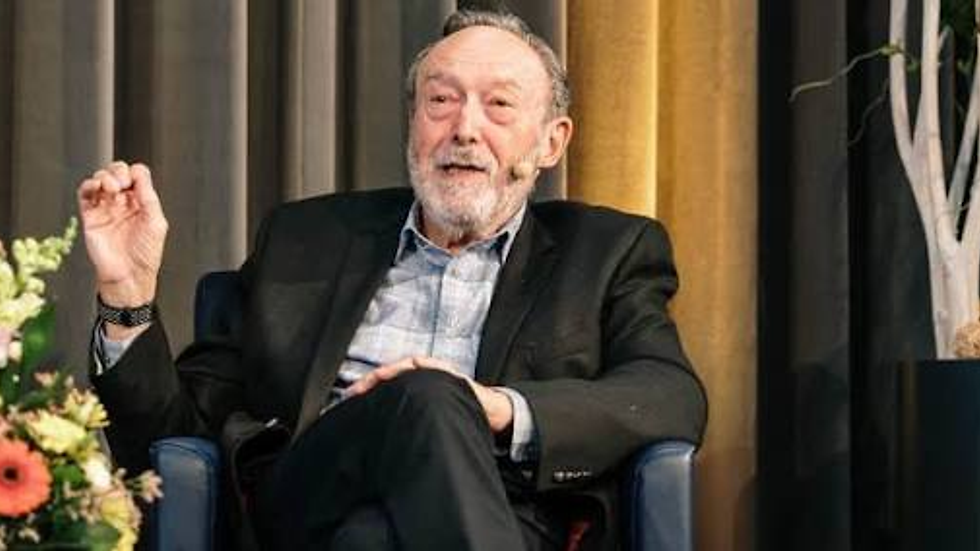
Stephen Porges didn't set out to change how we understand the body. He was trying to understand the heart. In the 1990s, Porges - a neuroscientist and professor at the University of Illinois - was studying the relationship between heart rate variability and autonomic nervous system function. What he discovered in the process would become one of the most influential frameworks in somatic and trauma-informed practice of the last thirty years: Polyvagal Theory.
The autonomic nervous system, as Porges described it, is not simply a binary system of fight-or-flight versus rest-and-digest. It has three distinct states, governed by three distinct branches of the vagus nerve - the longest cranial nerve in the body, running from the brainstem through the heart, lungs, and digestive system.
The first state is ventral vagal - the state of safety, social engagement, curiosity, and connection. This is the state in which we are most fully ourselves: open, regulated, capable of genuine relationship.
The second is sympathetic activation - the mobilisation state. Fight, flight, urgency, anxiety. The body preparing to respond to threat.
The third is dorsal vagal - the shutdown state. Collapse, dissociation, withdrawal. The nervous system's last resort when fight or flight is not possible.
Polyvagal Theory proposed that the body is constantly scanning its environment for signals of safety or danger - a process Porges called neuroception - and shifting between these three states in response. Not consciously. Automatically. Below the level of awareness.
The profound implication for fascial work is this: the state of the nervous system directly determines the state of the fascia. A body living predominantly in sympathetic activation will have fascia that reflects that - held, braced, dense, and defended. A body in dorsal vagal shutdown will have fascia that reflects collapse and disconnection. Only in ventral vagal safety does the fascia have the conditions to genuinely release.
This is why the pace, quality, and presence of self-myofascial release matters so much. The slow, sustained, gentle application of pressure through the UNWIND™️ tools is not just a mechanical intervention -it is a signal to the nervous system. A communication of safety. An invitation to the body to shift from sympathetic bracing into ventral vagal openness - and in that openness, to release what it has been holding.
For UNWIND™️, Polyvagal Theory is the neurological framework for everything. It explains why rushing never works. Why force produces resistance rather than release. Why the most powerful self-release practice is one approached with slowness, curiosity, and genuine presence.
Safety is not a luxury in this work. It is the prerequisite for healing.
A Method Built on Giants
The UNWIND™️ method did not emerge from a single insight or a single practitioner. It grew from the accumulated wisdom of seven extraordinary thinkers - and from the clinical experience, personal practice, and lived embodiment of the practitioners who have carried their work into the world.
Tom Myers gave us the map:
"The fascia is the bridge between our physical being and our emotional memories, revealing the body's hidden language."
Stephen Levin gave us the structure.
"The body is not a lever system - it is a tensegrity structure in which every part is connected to every other part through a continuous network of tension, and fascia is the medium through which that tension is transmitted."
Jean-Claude Guimberteau showed us the living tissue.
"Listen closely: your fascia whispers the secrets of your body's past, offering clues to a healthier future."
John F. Barnes gave us the practice.
"Healing begins when we unlock the tensions held deep within our tissues - where past stresses and memories are stored."
Robert Schleip gave us the science.
"Fascial release is a subtle art that awakens the body's natural ability to regenerate and repair."
Carla Stecco gave us the anatomy.
"Fascia is not just a passive tissue - it is an active, sensitive structure that participates in movement, proprioception, and the regulation of the body's internal environment."
Stephen Porges gave us the safety.
"Safety is not the absence of threat. Safety is the presence of connection - and it is the foundation upon which all healing is built."
Together, they gave us a completely new understanding of what the body is, how it holds experience, and what it needs to heal.
The UNWIND™️ method is the practical application of that understanding - a way of working with the body that honours its intelligence, respects its pace, and trusts its capacity to regenerate and repair when given the right conditions.
This is not just a tool. It is a philosophy. And it has been built, piece by piece, on the shoulders of people who refused to accept that the body was less extraordinary than it actually is.
Experience the UNWIND™️ Method
Want to experience this work for yourself?
Visit www.unwind-myofascial-release.com to explore workshops, tool kits, and the UNWIND™️ Practitioner Training.
The body has been waiting. Now you have the language to listen.


Comments